The Remembering God

But God remembered Noah and all the beasts and all the cattle that were with him in the ark; and God caused a wind to pass over the earth, and the water subsided.
— Genesis 8:1
Thus it came about, when God destroyed the cities of the valley, that God remembered Abraham, and sent Lot out of the midst of the overthrow, when He overthrew the cities in which Lot lived.
— Genesis 19:29
Then God remembered Rachel, and God gave heed to her and opened her womb.
— Genesis 30:22
So God heard their groaning; (in Egypt) and God remembered His covenant with Abraham, Isaac, and Jacob. God saw the sons of Israel, and God took notice of them.
— Exodus 2:24-25
When you go to war in your land against the adversary who attacks you, then you shall sound an alarm with the trumpets, that you may be remembered before the LORD your God, and be saved from your enemies.
— Numbers 10:9
And he was saying, “Jesus, remember me when You come in Your kingdom!” And He said to him, “Truly I say to you, today you shall be with Me in Paradise.”
— Luke 23:42-43
“Therefore, as we celebrate the memorial of his Death and Resurrection, we ofter you, Lord,
the Bread of life and the Chalice of salvation….. Remember, Lord, your Church, spread throughout the world,
and bring her to the fullness of Love…. Remember also our brothers and sisters who have fallen asleep in the hope of the resurrection, and all who have died in your mercy: welcome them into the light of your face.” - Eucharistic Prayer II (The Liturgy of the Word)
Reflection:
When the Lord remembers…. Things happen. And a “memorial” in the Bible is not just something performed in God’s presence to remind us, but more specifically, to “remind God.”
“Your prayers and alms have ascended as a memorial before God.”
— Acts 10:4
This means that every time Christians celebrate the Lord’s Supper together, which our Blessed Lord told us “to do” as a “memorial”, God remembers. And when God remembers, he “takes notice” of us, and He comes and acts. So, the liturgical action of doing the Lord’s Supper together is not just a reminder to us of what God has done for us, it is also a communal action which the gathered people of God perform to cause the Father to remember the Covenant His Son established for His Bride by His own shed blood. The reason we chafe at this is because we have allowed “contemplation” to replace biblical worship. We reason that God doesn’t REALLY “remember” - even though the Bible tells us He does! And instead of simply listening and taking God at His Word, we create an “idol of the philosophical mind”, call this Idol “God”, and shackle Jesus (again) to our “whipping post”, shackled in iron forged and hammered out by institutionalized unbelief.
The early church understood this, hence the language in the ancient liturgies which speak of gathering together to remind God to keep His Covenant. Just as in the Old Covenant, the worshippers (facilitated by the priests) would take a “memorial portion of bread” (grain), place it into the altar fire on top of the slain animal to “remind” God to “pass over” the sins and bring His Covenant blessings - - simply by seeing the liturgical action performed in His Name.
“The priest then shall take up from the grain offering its memorial portion, and shall offer it up in smoke on the altar as an offering by fire of a soothing aroma to the LORD.”
— Leviticus 2:9
This rite is fulfilled in the Lord’s Supper. Jesus takes the “memorial bread”, receives a “portion” (after breaking it), He eats it as YHWH does when it is placed on the altar, and then He gives the remainder to His disciples (New Covenant “priests”) to eat.
“The remainder of the grain offering belongs to Aaron and his sons: a thing most holy of the offerings to the LORD by fire.”
— Leviticus 2:10
“Take, eat; this is My body.” - Matthew 26:26
But, in the Old Covenant, the priests were forbidden to “take the cup” and drink from it. Instead, they had to pour out the “drink offerings of wine” before the Lord. In the Old Covenant, the “memorial” act to renew the Covenant was linked primarily to the bread. In the New (Completed) Covenant, the “memorial” act of Covenant renewal is linked to the wine.
“And when He had taken a cup and given thanks, He gave it to them, saying, “Drink from it, all of you; for this is My blood of the covenant, which is poured out for many for forgiveness of sins.”
— Matthew 26:26-28
And the reason why the “new priests” of the New Covenant can now drink the wine of the Covenant is because the work is finished. Jesus the Priest King (according to the order of Melchizedek — Hebrews 5:10), has come and filled up what was lacking in our service to the Father after Adam failed, which was to serve and guard God’s holiness - without blemish - as priest AND king. Bread is the food of beginnings. it is priestly (alpha) food. Wine is the drink of endings. It is kingly (omega) drink. The beginning work of the priests in the Old Covenant - which was never finished - is like a “children’s offering”,accepted by God in its “elementary stage”, but not complete. However, the ending work of the Priest King Jesus in the New Covenant IS finished. it is like an adult’s final, matured offering. We see this organic sequence play out in our ordinary lives. In the morning, we NEVER start out the day drinking wine or beer (unless you have a big problem which you need to discuss with your pastor). We typically start the day by eating bread products - toast, bagels, cereal, etc… But, at the end of the day, when the “work” is over, we “sit down” (in sabbath enthronement), eating our dinner with a glass of wine or cold beer in our hands.
The same sequence applies in the Covenant history. Mankind was forbidden the Tree of Rulership because we had to mature enough to “be of age”, and then God would come and pour us a glass of this tree’s “fruit”!
Remember, the best wine is “aged”. It needs to “wait”. The same with the Covenant people. When the fullness of the times came, God was no longer “carding the people”, but He came “rolling in the kegs”!
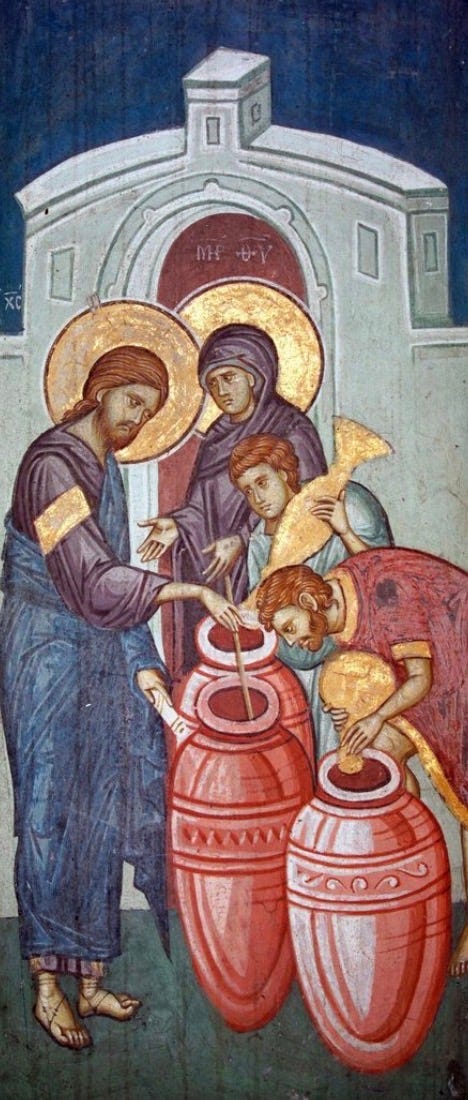
“The LORD of hosts will prepare a lavish banquet for all peoples on this mountain;
A banquet of aged wine, choice pieces with marrow,
And refined, aged wine.”
— Isaiah 25:6
And so, when we sit together and drink of the mature beverage in Jesus Name, God remembers, and we remember that the work is finished, And He comes and He acts, renewing the Covenant of Joy and Mirth with His matured Bride on earth.